

The problem isn't what our leaders don't know. It's what they keep doing despite knowing better.
A few weeks ago, I attended ICF Converge 2026 in Washington, DC, alongside coaches from around the world. Three days of conversations about leadership, transformation, artificial intelligence, and human development.
I returned with a question I'd like to share with HR and talent development leaders.
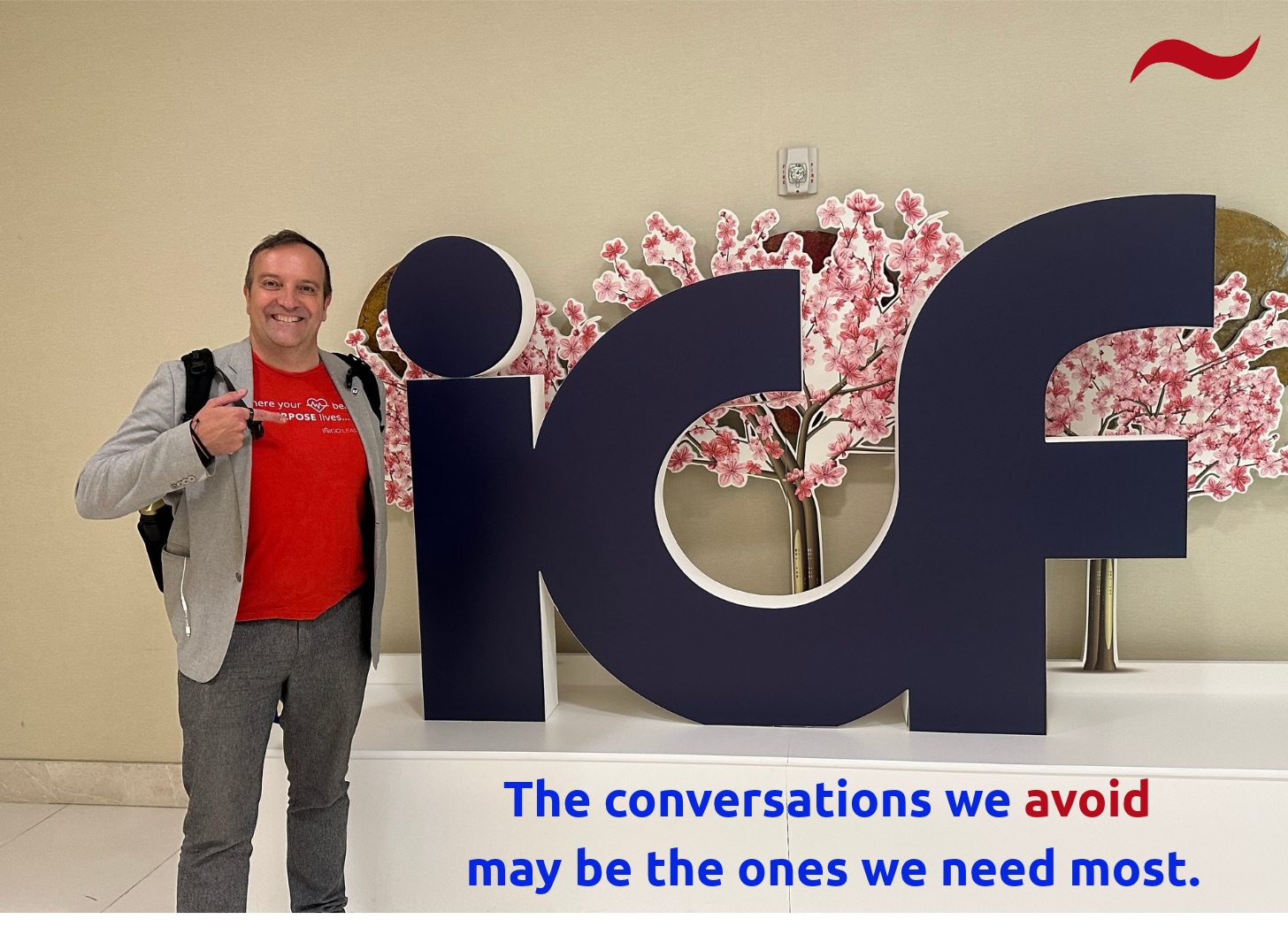
ICF Converge’26, Washinton DC.
Are we developing people who can change, or professionals who simply accumulate knowledge?
For years, we've invested in training, competency models, assessments, and leadership development programs. Now we're adding AI to the mix. And that's a good thing. I've spent much of my career designing and facilitating these learning experiences myself.
But we continue to confuse learning with changing behaviors.
We Know What We Should Do. So Why Don't We Do It?
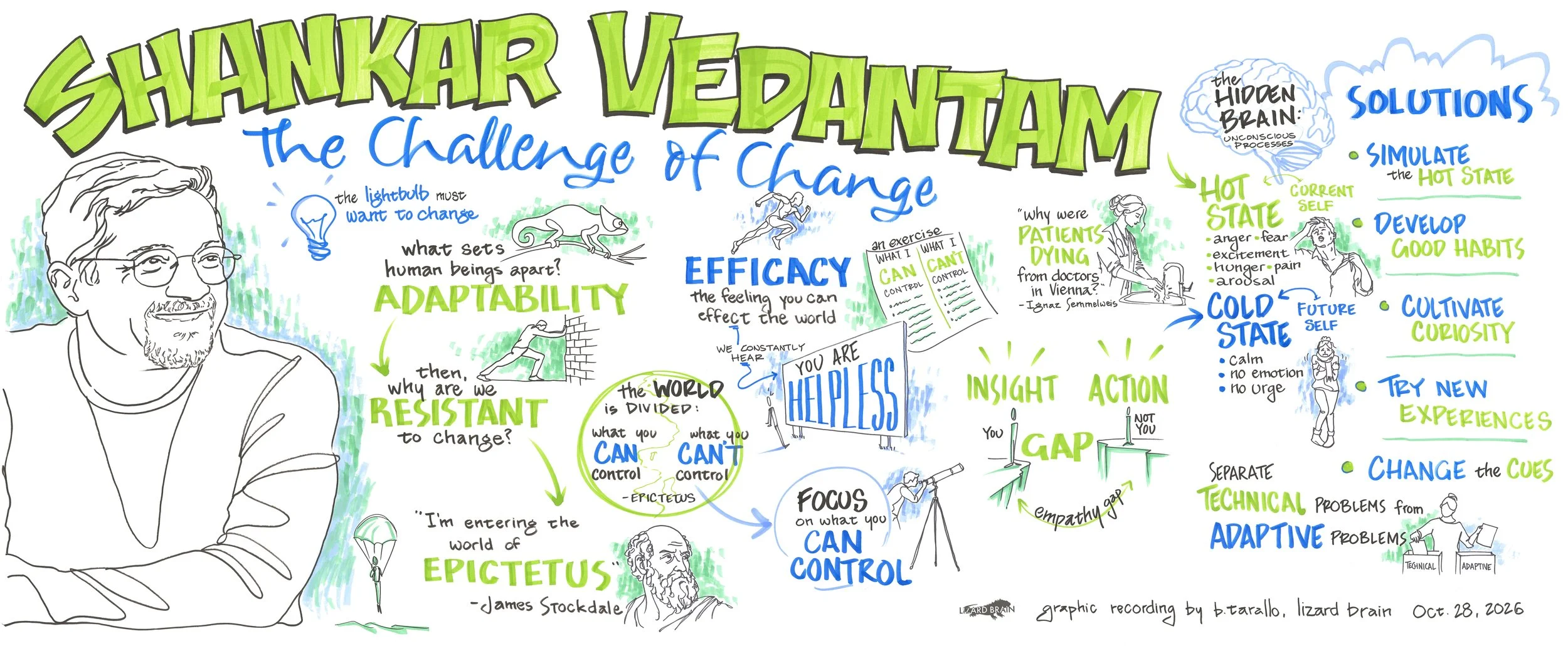
Author: Graphic recording by Brian Tarallo, Lizar Brain, Oct.28, 2026.
Shankar Vedantam, creator of the Hidden Brain podcast, opened the conference with a fascinating paradox.
Human beings have an extraordinary ability to adapt. Yet try changing a team's habits, convincing an executive to delegate, or getting someone to abandon a way of working they've followed for twenty years.
Good luck!
How many leaders have attended active listening training but still interrupt people in meetings? How many understand the importance of delegation yet continue to control every decision?
The problem isn't always a lack of knowledge or tools.
Sometimes it's fear. Or a professional identity built over years around being the expert, staying in control, or never making mistakes.
This is where coaching can make a difference.
A good coach doesn't simply ask what you need to do. They help you discover what's preventing you from doing it. They hold up a mirror that reveals your blind spots and challenges your beliefs.
We're So Busy That We Don't Have Time to Think
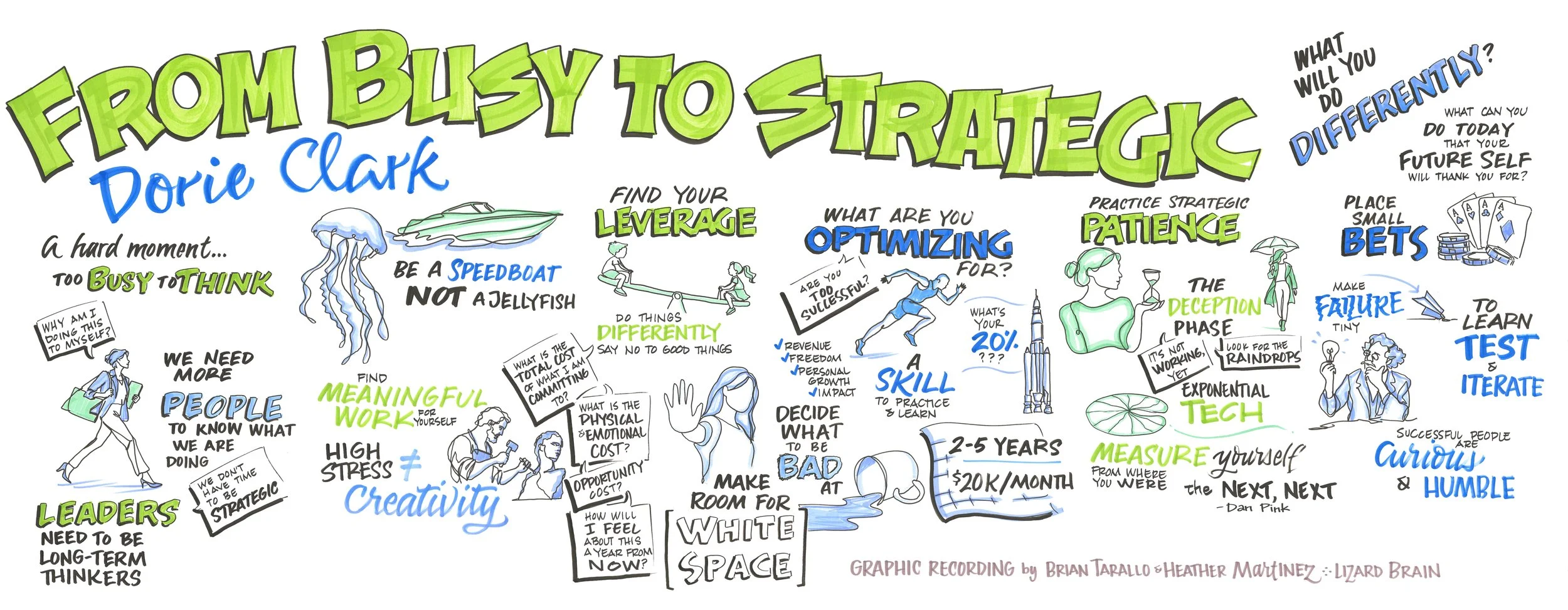
Author: Graphic recording by Brian Tarallo, Lizar Brain, Oct.30, 2026.
Dorie Clark, a strategy and professional development expert, addressed another reality I constantly see in organizations.
Our leaders have packed schedules, endless meetings, and priorities that seem to change every week.
We expect strategic thinking, creativity, and innovation. Yet we barely give them space to think.
Dorie shared a warning from futurist Jonathan Brill: Give smart, committed people the wrong goal, and they may succeed at achieving it.
We can have extraordinarily efficient teams pursuing the wrong priorities entirely.
Coaching offers something increasingly scarce in organizations: a trusting space to slow down, listen, challenge decisions, and explore alternatives.
And yes, those conversations can be uncomfortable. Sometimes they need to be, because they force us to question what we've always assumed to be true.
What Do We Do with AI Now?
This was one of the most interesting debates at the conference.
Tim Harrison shared an idea that resonated with me: technology can expand our capabilities, but people determine how we use it.
His message, “Who you are is how you prompt,” made me think. Our ability to use AI effectively also depends on our judgment, self-awareness, and clarity of thought.
AI can already help us prepare for difficult conversations, explore scenarios, and reflect between coaching sessions.
But let's not confuse getting answers with developing critical thinking.
Lyssa deHart shared recent research comparing human coaching with AI coaching. Early findings suggest interesting possibilities, but also limitations related to presence, trust, and sustained behavioral change.
The evidence is still evolving.
My position is clear: We don't need to choose between human coaching and AI. We need to learn how to combine them thoughtfully.
Technology can support reflection. Human coaching can help us recognize contradictions, face uncomfortable conversations, and take accountability for our decisions.
Three Decisions I Would Make as an HR Leader
💡 1. Measure behavior, not just learning.
Are leaders behaving differently six months later? Do their teams notice the difference?
Development needs to translate into action and sustainable habits. Small, consistent changes can be more valuable than ambitious commitments that never become reality.
💡 2. Integrate coaching at critical moments.
Promotions, conflicts, organizational change, or new responsibilities.
Recently, an HR vice president at a multinational bank told me that coaching is a luxury; I disagree completely. Companies have made it a luxury commodity by only making it available to senior leaders and a few in middle management.
I couldn't agree more.
Why limit such a valuable development tool to a privileged few?
💡 3. Experiment with hybrid coaching and AI models.
I'd use technology to support reflection and practice between sessions, protect confidentiality, and evaluate results before scaling programs.
Are We Brave Enough to Have the Conversations We're Avoiding?
Researcher Sunita Sah reminded us of something uncomfortable: we often remain silent even when we know we should speak up.
How many HR professionals dare to challenge a CEO's decision? How many leaders avoid giving feedback because they're afraid of making someone uncomfortable?
After more than two decades working in people development, one thing has become increasingly clear to me.
We need professionals who can challenge their beliefs, recognize their limitations, and learn to become comfortable with discomfort.
Because knowing how to lead and having the courage to do it are two very different things.
Perhaps the next big innovation in talent development won't be another tool. Perhaps it will be learning to have the conversations we've been avoiding for far too long.
Here's my challenge to you:
What's the difficult conversation you've been putting off because you haven't found the courage to have it?
I'd love to hear your thoughts.
Íñigo